Kho Ku So Bamboo Bridge Planning Guide for Mae Hong Son Journeys
A practical route-planning perspective on Pai sightseeing, regional packages, and respectful local touring
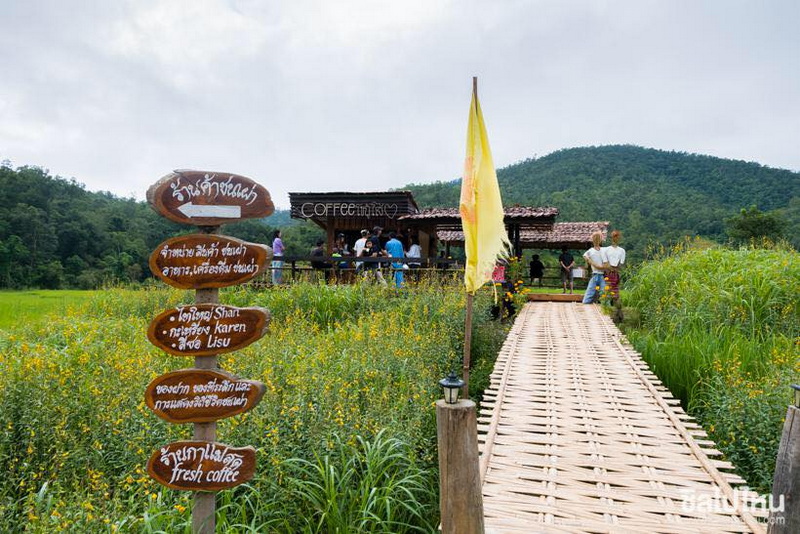
In Pai District, Mae Hong Son, the Kho Ku So Bamboo Bridge offers a gentle way to experience the countryside beyond the town centre. The elevated bamboo walkway crosses rice-growing land and connects visitors with a slower rural setting, where the landscape, seasonal conditions, and community surroundings are as important as the bridge itself. It is best approached as one stop within a wider journey rather than as an isolated attraction. For travelers starting in Chiang Mai, the visit raises a practical question: should Pai be reached through a regional package, a custom route, or independently with selected local excursions? A Chiang Mai to Mae Hong Son itinerary can be arranged in several broad formats, but the right choice depends on available time, tolerance for winding roads, interest in cultural stops, and the amount of flexibility desired. This guide focuses on how the options fit together without assuming fixed schedules, prices, or inclusions. The aim is useful planning rather than a sales pitch. You will find ways to compare overland packages, understand how Local Tours in Chiang Mai may complement a Pai visit, and place Pai Canyon and Pai Walking Street into the same travel plan. Conditions at rural attractions can change, so confirming current access and transport details locally remains an important part of responsible preparation.
Choosing a Chiang Mai to Mae Hong Son route
A Chiang Mai to Mae Hong Son Tour Package usually works best for travelers who want the broad geography of northern Thailand organized into a coherent journey. Depending on the operator and route design, a package may connect Chiang Mai with Pai and other parts of Mae Hong Son Province, using road travel to link mountain viewpoints, villages, natural areas, and town-based stops. Because operators change their itineraries, travelers should compare the actual route, transport style, lodging arrangements, and time spent in each place rather than relying only on the package title.
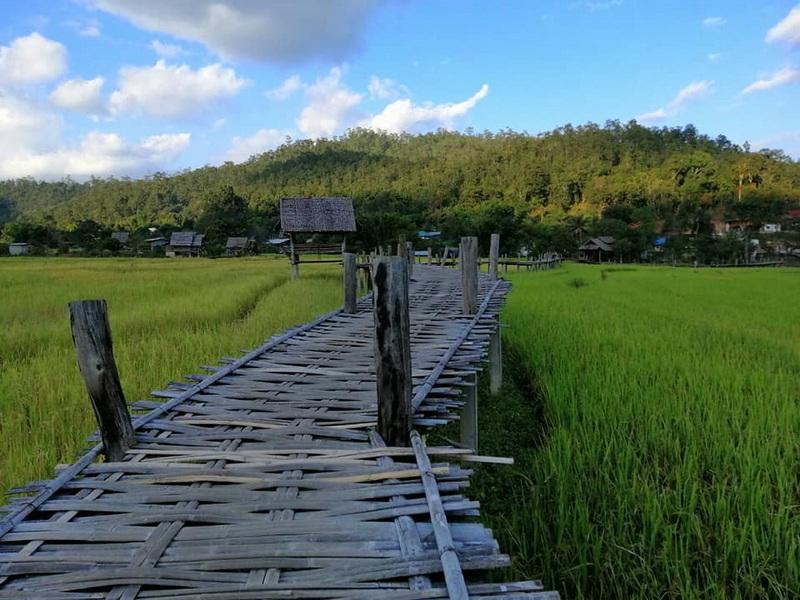
For a visit centred on the bridge, Pai is the logical base for thinking about the day. The attraction lies in a rural area outside the main town, so a route that allows unhurried movement is generally more suitable than one filled with short photo stops. Ask whether the plan permits independent time in Pai, whether rural access is arranged or left to the traveler, and how much road time is involved. These questions are especially useful because the mountain roads between Chiang Mai, Pai, and Mae Hong Son can make a simple map distance feel misleading.
There are several broad planning approaches. A multi-day regional tour can reduce the work of arranging transport between provinces and may suit first-time visitors who want a structured overview. A shorter Pai-focused arrangement can leave more room for the bridge and nearby countryside, while an independently organized journey gives travelers control over pauses and timing. None of these formats is automatically better; the sensible choice depends on whether convenience, depth, or flexibility is the main priority.
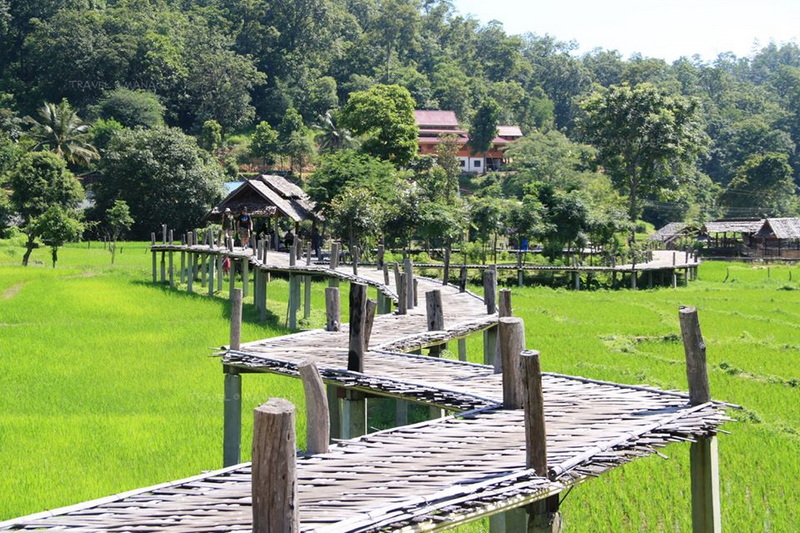
Travelers should also distinguish a package that passes through Pai from one that treats Pai as a meaningful overnight or sightseeing stop. If the bridge is a central interest, look for language that explains how rural attractions are handled instead of assuming every Mae Hong Son route includes them. Confirm current road conditions, meeting points, and any walking requirements before departure, particularly during periods of heavy rain or intense heat.
Planning time around the bamboo bridge
The Kho Kuu So Bamboo Bridge is easier to appreciate when the visit is planned around the setting rather than only the landmark name. Allow time to walk at a comfortable pace, observe the rice fields, and adapt to weather or ground conditions. The rural approach may feel different from a town attraction, so visitors should confirm the current access route and any local guidance before setting out.
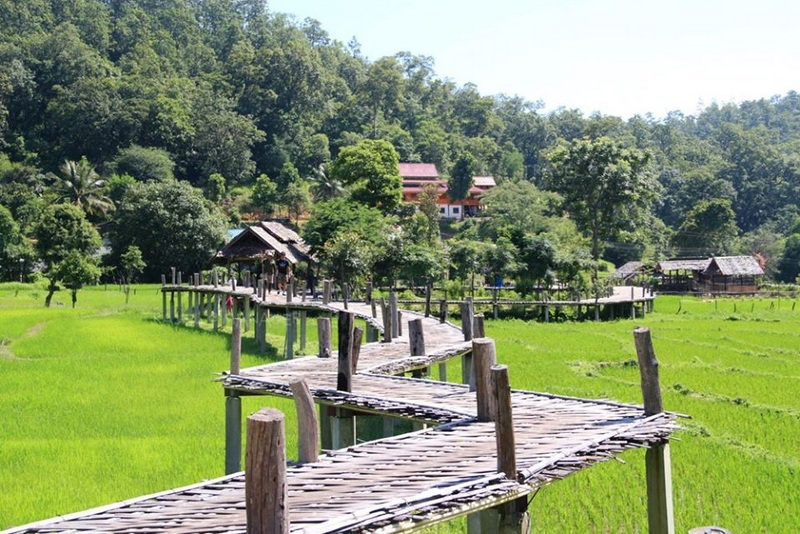
A useful day plan leaves room between the bridge and other Pai stops instead of treating every location as a timed photo opportunity. Light, heat, rain, and road conditions can affect how long the visit feels. Comfortable footwear, drinking water, sun protection, and modest clothing are practical choices, especially when the walkway or surrounding paths are exposed.
The bridge sits within a living agricultural landscape, so respectful behaviour matters. Stay on permitted paths, avoid entering planted areas without permission, and ask before photographing residents or workers. Visitors can also support the area through locally owned food, transport, or guiding services while keeping their impact low. These simple choices help maintain a calm atmosphere and make the visit more considerate for the people who live and work nearby.
Two Pai stops that broaden the itinerary
Once the regional route and tour format are clear, the surrounding Pai experience can be shaped around contrasting landscapes and a town-centre evening. These two places add variety without taking attention away from the bridge’s rural setting.
Pai Canyon
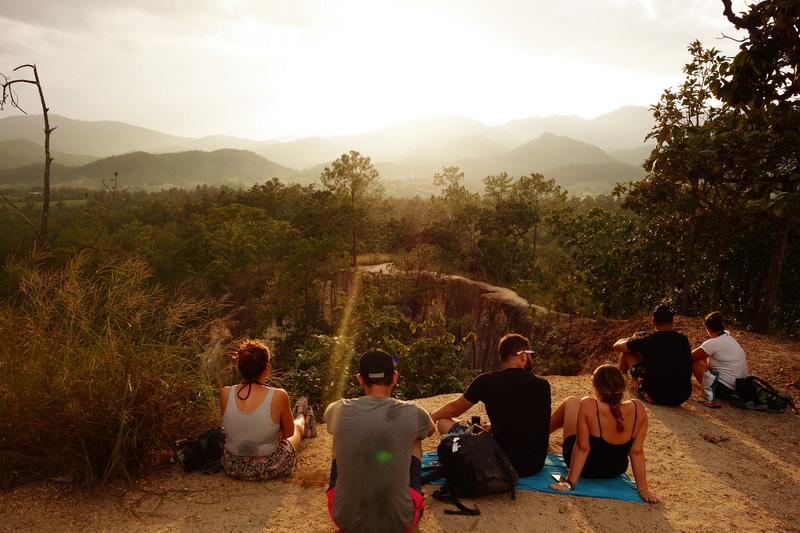
Pai Canyon adds a distinctly different landscape to a bridge-focused itinerary. Its narrow ridges, exposed earth, and elevated views create a more rugged walking environment than the level bamboo path through the rice fields. Some sections have steep drops and uneven surfaces, so visitors should use care, wear suitable shoes, and avoid pushing beyond their comfort level for a photograph. Conditions can feel particularly hot in open areas, making water and sensible timing useful.
The two sites work well together because they show contrasting sides of Pai District: cultivated lowland scenery at the bridge and eroded highland terrain at the canyon. They do not need to be rushed into one tightly timed outing. A package or driver arrangement should allow for road travel and changing light, while independent visitors should verify current access conditions before setting out. Treating the canyon as a landscape to observe rather than a place for risky posing helps preserve both personal safety and the quiet character of the site.
Pai Walking Street
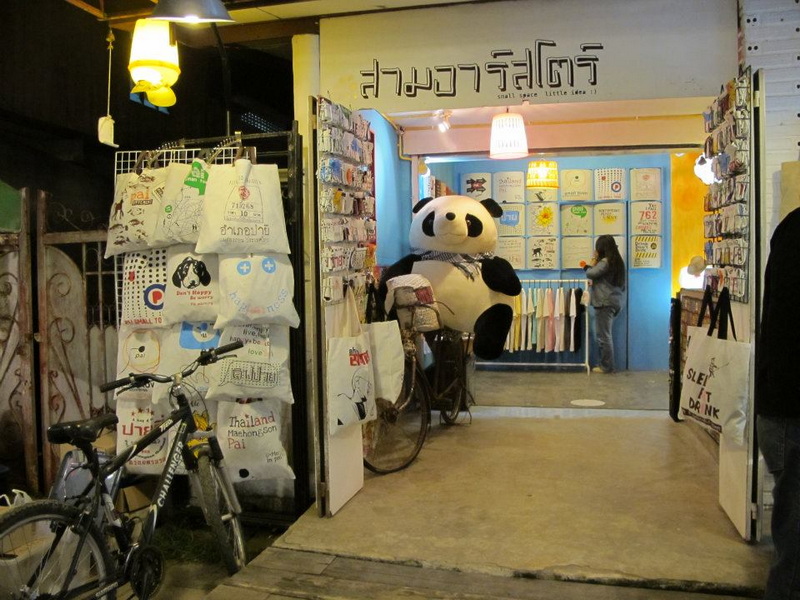
Pai Walking Street provides an evening-oriented counterpart to the countryside. The central street area is known for food stalls, drinks, small shops, and a relaxed flow of visitors, although the exact atmosphere changes with season, weather, and local business activity. It is a practical place to sample regional flavours, browse modest souvenirs, and pause after a day of road travel without expecting a formal cultural performance.
Visitors can make the market experience more respectful by asking before photographing people or products, carrying reusable bags when possible, and giving vendors room to work. A stop here also helps balance the itinerary: the bridge offers open rural views, while the walking street reveals Pai as a lived-in town with its own evening routines. If traveling through a package, confirm how much free time is available; if traveling independently, allow for pedestrian congestion and return transport rather than assuming every route remains convenient late at night.
How Chiang Mai local tours can support the journey
Local Tours in Chiang Mai can be useful before or after a trip to Pai, even when their primary focus is the city rather than Mae Hong Son Province. A locally based operator may help travelers understand transport choices, cultural etiquette, and the practical rhythm of northern travel. City-based sightseeing can also provide a contrast to the rural atmosphere around the bamboo bridge, making the wider journey feel less like a list of disconnected attractions.
When comparing local tour providers, concentrate on clarity. A responsible inquiry should cover the meeting location, approximate driving expectations, group size, languages available, cancellation terms, and whether activities take place on private land or in community-managed areas. It is also reasonable to ask how the provider approaches photography, waste, and visits to villages. Clear answers are more valuable than grand claims about being the best or offering an experience that cannot be guaranteed.
A local tour in Chiang Mai may complement a Mae Hong Son route in several ways. It could introduce travelers to northern food traditions, temples, markets, or craft communities before they travel west. Alternatively, it may be useful after the road journey for a less demanding day in the city. These experiences do not replace time in Pai, but they can help visitors arrive with more context and a more respectful understanding of the region.
Independent travelers can use the same questions even when they do not book a tour. Check local transport information, keep a flexible timetable, and avoid treating rural communities as staged attractions. Around the bridge, visitors should remain on designated paths where possible, avoid entering cultivated areas without permission, keep noise modest, and carry rubbish out when disposal facilities are limited. Supporting locally owned food, transport, or guiding services can be a considerate way to contribute without turning community life into a spectacle.
Building a thoughtful Pai day into a wider journey
Kho Ku So Bamboo Bridge is most rewarding when planned as part of a paced Pai itinerary rather than treated as a quick label on a long checklist. Compare regional packages by their real route and flexibility, use Chiang Mai-based local knowledge where it adds context, and leave room for weather and road conditions. Pairing the rural bridge with Pai Canyon and Pai Walking Street creates a varied day, while respectful behaviour keeps the focus on landscape and local life. With those basics in place, travelers can choose a route that feels practical, balanced, and suited to their own way of exploring Mae Hong Son.
